 Reserve
Reserve
Reserve
Twelve miles from downtown Hartsville sits the oldest paved superspeedway in the South: an egg-shaped oval built around a fishing pond, and still racing.
Hero photo: formulanone (Flickr). CC BY-SA 2.0, via Wikimedia Commons
The shape is the first thing you notice. Darlington is not a true oval. It bulges and pinches, wider at one end than the other, and the asymmetry is not an accident of engineering: it is the print of a fishing pond. When Harold Brasington set out to build the track in his hometown of Darlington, South Carolina, the landowner, Ramsey, was protective of a pond near the property, and Brasington bent the design around it. He made the radius of Turns 1 and 2 tighter than Turns 3 and 4. The result is a 1.366-mile loop that no driver has ever fully solved. Banking runs to twenty-five degrees in the first two corners, twenty-three in the back two, and just six on the straights. It looks wrong on paper. It races like nothing else.
Brasington had been to the Indianapolis 500, and he came home convinced the Southeast deserved a major paved superspeedway of its own. In 1950 he got one. Darlington opened that summer as Darlington International Raceway, and it is widely cited as the first paved superspeedway built for stock car racing in the American South. Seventy-five years later the nicknames have stuck: the Lady in Black, for the dark, abrasive surface, and the Track Too Tough to Tame, for the simple fact that the fastest way around runs perilously close to the outside wall. It is a difficult place to be fast. It is a harder place to be patient. That tension is the whole appeal.
The track opened to the public on August 19, 1950, for the qualifying races, but the date that mattered came two weeks later. On September 4, 1950, Darlington ran the inaugural Southern 500, NASCAR's first 500-mile race. Seventy-five cars took the green flag in front of roughly twenty-five thousand people, an enormous crowd for stock car racing at the time, and the field ground its way through the afternoon.
It took the winner about six hours and thirty-eight minutes. Johnny Mantz crossed the line first at an average speed of roughly seventy-five miles an hour: slow by any modern measure, fast enough to last. He had a quiet advantage: a Firestone tire designed for asphalt stock car racing, where most of the field wore out rubber meant for dirt. The Southern 500 was the only race of its distance in the sport until the Daytona 500 arrived in 1959. It is now counted among NASCAR's Crown Jewel events.
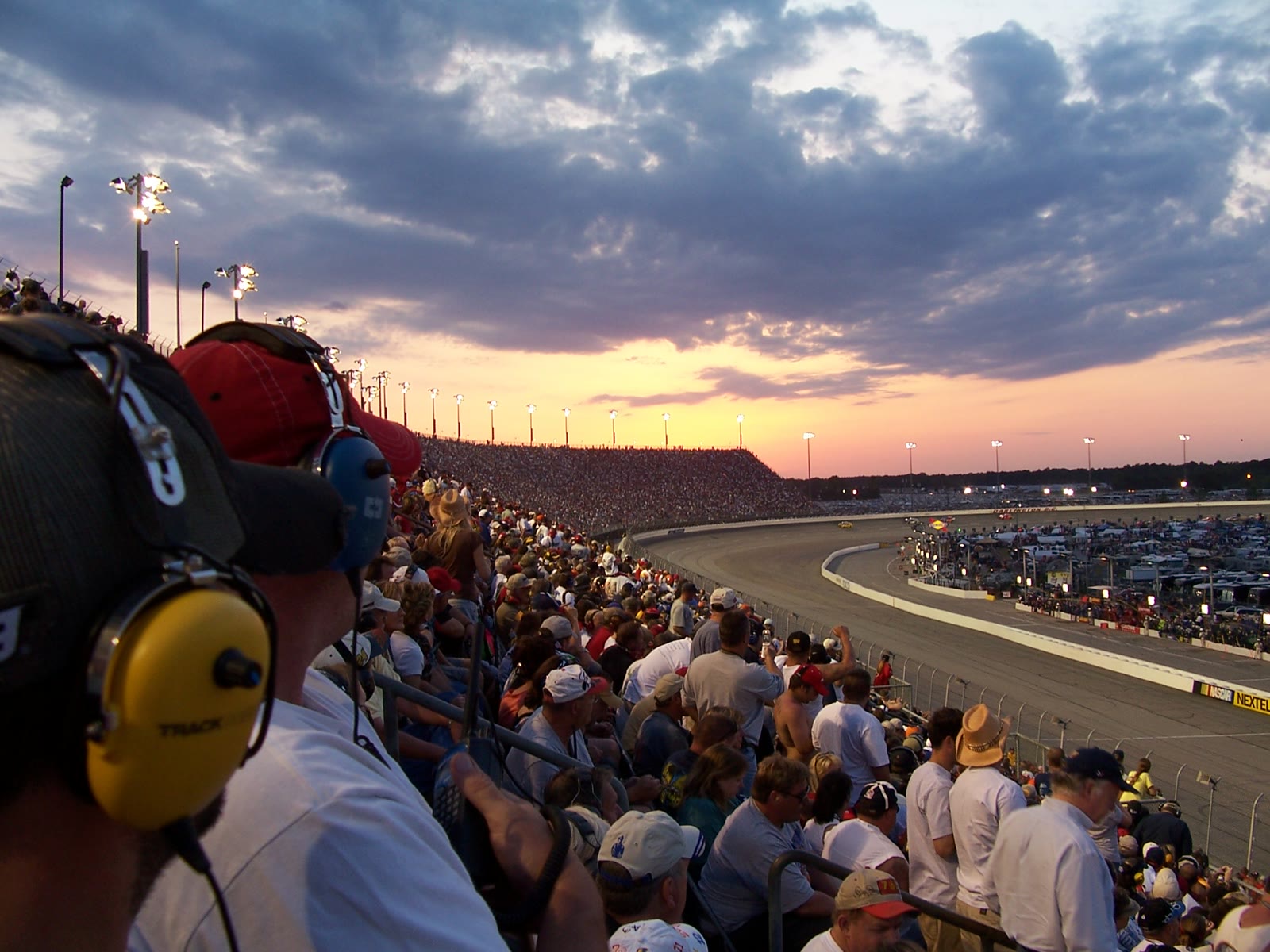
For more than half a century the Southern 500 belonged to Labor Day weekend: every year from 1950 to 2003. When the race lost its traditional date, fans noticed; when it returned to Labor Day weekend in 2015, the track leaned into the homecoming. NASCAR, Darlington, and the teams launched a throwback theme, dressing modern cars in retro paint schemes that honor the sport's own history. For one weekend a year the field rolls out looking like a museum that learned to move.
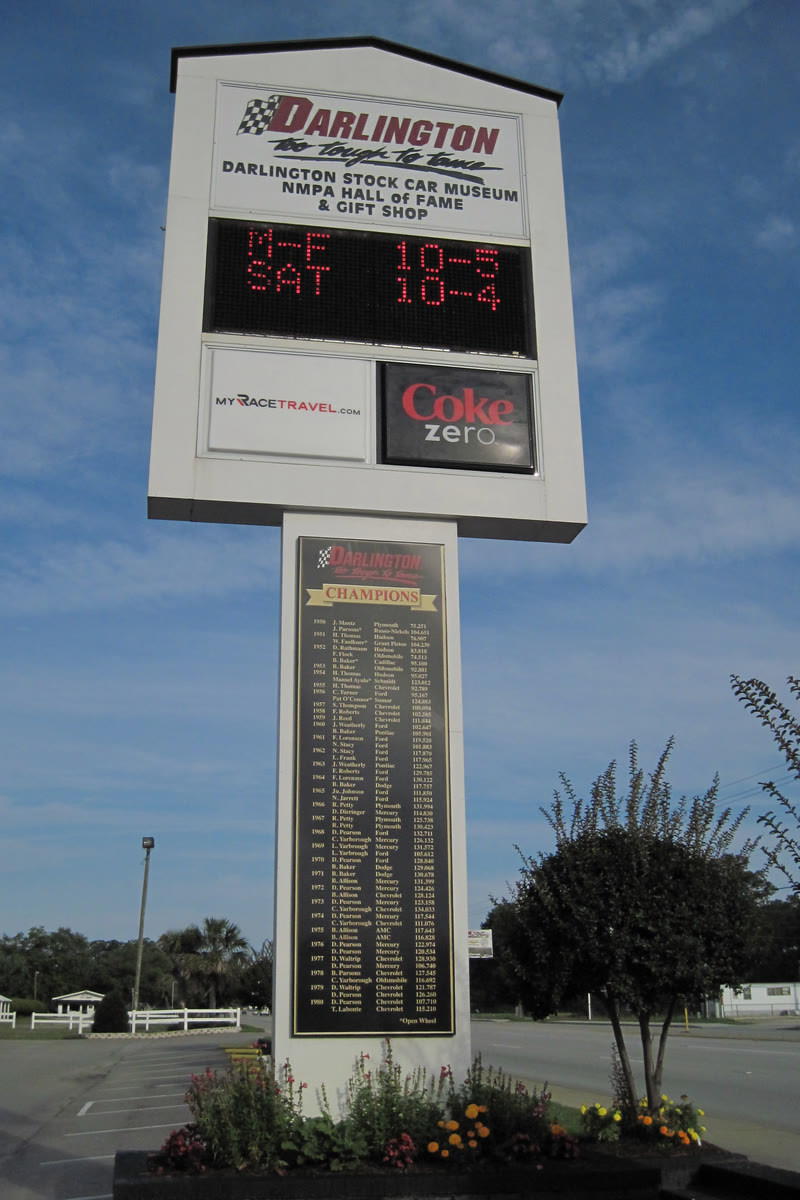
That instinct toward memory has a permanent home at the track. The museum on the grounds was dedicated on May 2, 1965, as the Joe Weatherly Stock Car Museum, named for the two-time NASCAR Grand National champion of 1962 and 1963. After a major renovation and expansion in 2003 it took a new name, and it now holds the National Motorsports Press Association Hall of Fame: vintage stock cars, photographs, and small human artifacts, down to Joe Weatherly's racing shoes.
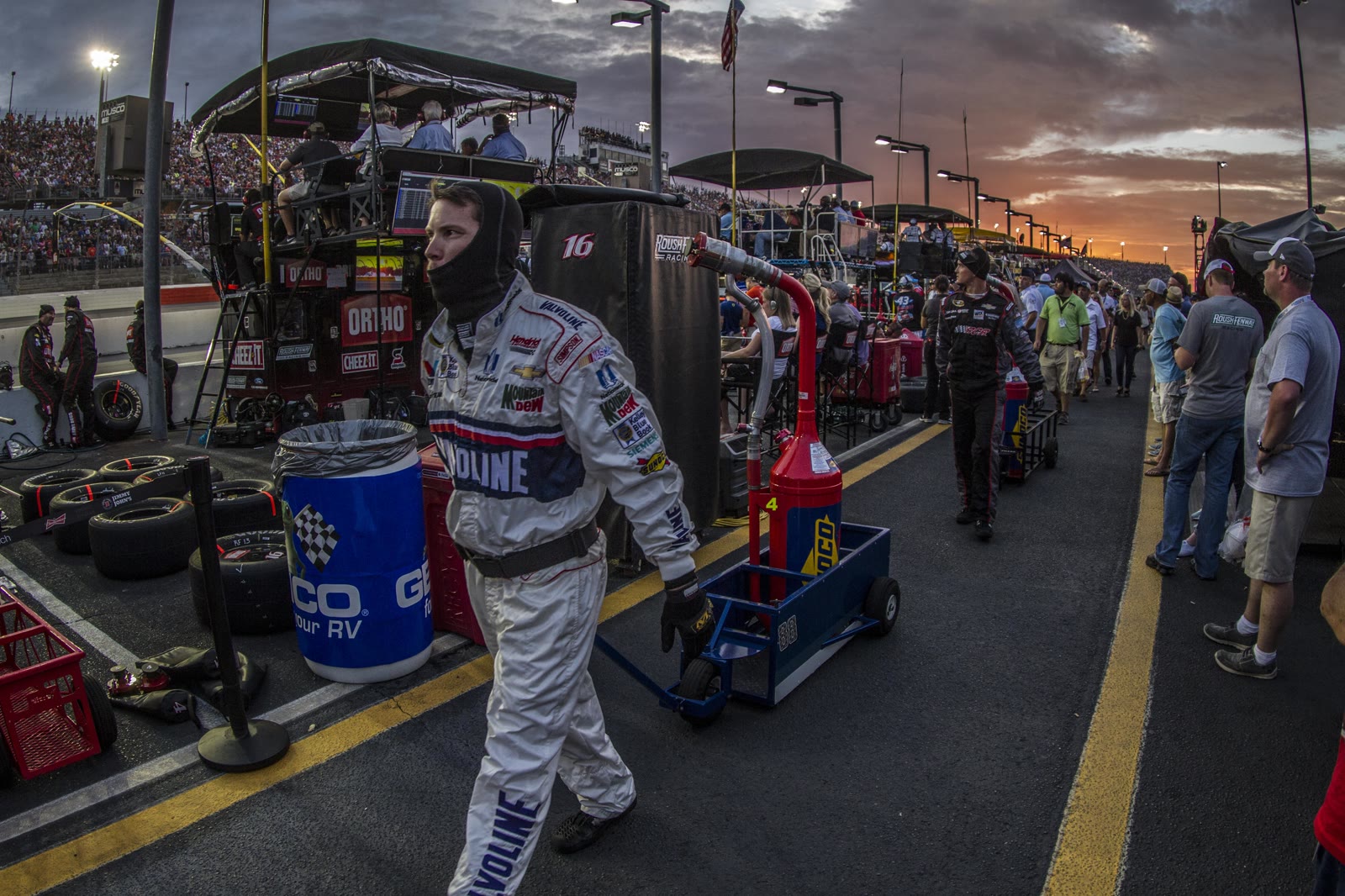
"The Track Too Tough to Tame." The enduring nickname for Darlington Raceway, for the difficulty of running close to the wall
A race weekend creates a logistics question. The grandstands seat roughly forty-seven thousand, the traffic builds with them, and the chain hotels nearest the gates fill first and longest. The answer is to be close, but not on top of it. The Mantissa stands at 130 East Carolina Avenue in downtown Hartsville, about twelve miles from the track: a twenty-minute drive in, and a twenty-minute drive back to somewhere calm when the engines stop.
The seventeen suites read more like apartments than hotel rooms. Full kitchens, premium beds: room to spread out for a crew or a family, to make coffee before an early gate, to keep a cooler stocked across a long Labor Day weekend. Parking is free, so the car stays put downtown and you drive out only when you mean to. Evenings settle on the rooftop, where the lounge pours sunset cocktails above downtown; Sam Kendall's is at the elbow for dinner, with the Rooster 136 and Wild Heart Brewing Company a short walk on. The track gives you the noise. Downtown Hartsville gives you the night after it.
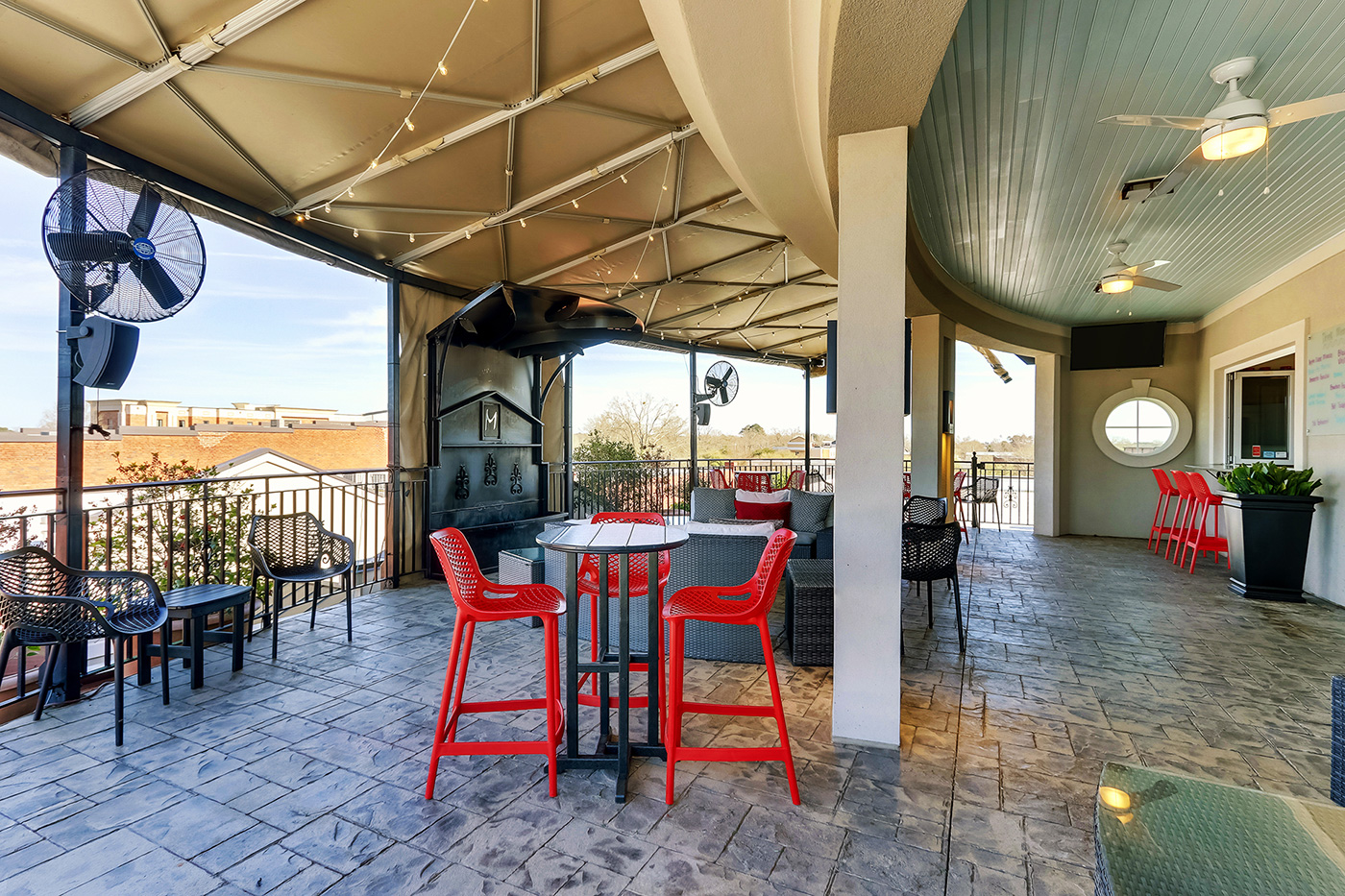
The Mantissa Hotel sits in downtown Hartsville, about twelve miles and a twenty-minute drive from Darlington Raceway at 1301 Harry Byrd Highway. Its seventeen all-suite rooms have full kitchens and premium beds, with a rooftop lounge and Sam Kendall's restaurant next door: a quiet downtown base for a loud race weekend.
Darlington Raceway is roughly twelve miles from downtown Hartsville, about a twenty-minute drive. The Mantissa Hotel at 130 East Carolina Avenue is one of the closest boutique hotels to the track, far enough from the gates to be calm at night and close enough to reach the grandstands before the green flag.
Darlington Raceway opened to the public on August 19, 1950, and is widely cited as the first paved superspeedway built for stock car racing in the American South. Its distinctive egg-shaped, asymmetric oval came from landowner Ramsey's concern about protecting a nearby fishing pond; to accommodate it, builder Harold Brasington made the radius of Turns 1 and 2 tighter than Turns 3 and 4.
The Southern 500 began in 1950 as NASCAR's first 500-mile race. Held on Darlington's first weekend of competition, the inaugural race ran on September 4, 1950, with a 75-car field and roughly 25,000 fans. It was the only 500-mile race in the sport until the Daytona 500 debuted in 1959, and it remains one of NASCAR's Crown Jewel events, traditionally run on Labor Day weekend.
Yes. The on-site museum was dedicated on May 2, 1965, as the Joe Weatherly Stock Car Museum, named for the two-time NASCAR Grand National champion. It was renamed following a major renovation and expansion in 2003 and is home to the National Motorsports Press Association Hall of Fame, with vintage stock cars, photographs and artifacts such as Joe Weatherly's racing shoes on display.
Hartsville is a motorsports-friendly base off the I-95 corridor. If you are riding or driving to the next event, these routes map the rest of the way.
Take in the Lady in Black, then come back to a quiet downtown corner twelve miles away. Book direct.
The Mantissa Hotel is independently owned and operated and is not affiliated with, sponsored by, or endorsed by Darlington Raceway, NASCAR, or any associated entity. All trademarks, including "Darlington Raceway," "Southern 500," "NASCAR," "The Track Too Tough to Tame," "The Lady in Black," and "Darlington Stripe," are the property of their respective owners and are used here nominatively for descriptive purposes only.