 Reserve
Reserve
Reserve
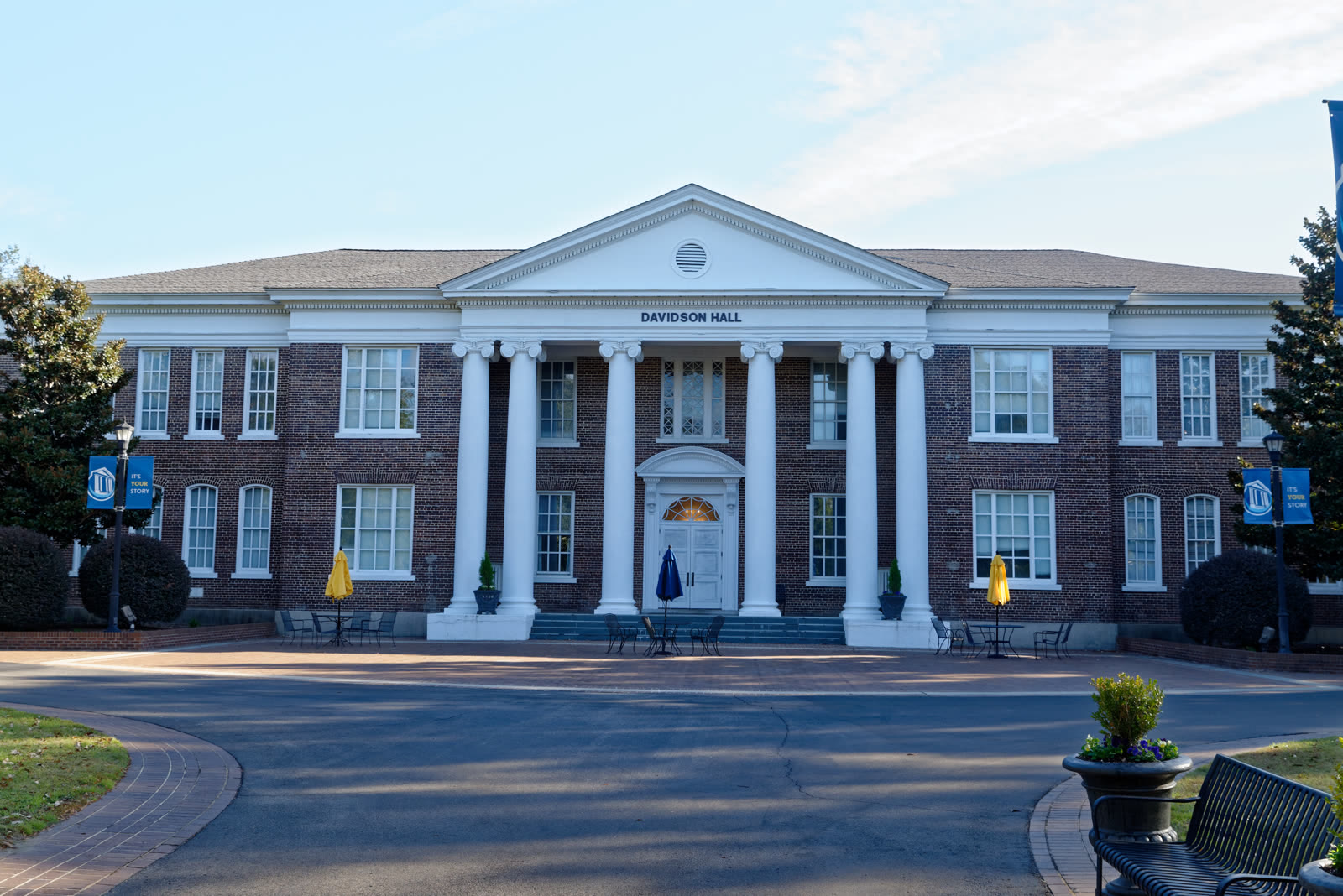
Davidson Hall. Photo: Jud McCranie. CC BY-SA 4.0, via Wikimedia Commons
A small liberal arts university that grew up in the middle of Hartsville, and never left the middle of it.
Stand on the steps of Davidson Hall and count the columns. There are six of them, Ionic, holding up a two-story pedimented portico that has faced the same Hartsville street since 1910. The building was the first thing the college ever built, and it was paid for, like nearly everything here in those early years, by one man. Major James Lide Coker put up twenty-five thousand dollars for an administration building in 1909, a hundred and fifty thousand for the endowment in 1910, and sixty-five thousand more in 1914 for a one-hundred-bed dormitory. The college that carries his name did not appear all at once. It was funded into being, line by line, by a Confederate officer turned merchant who had decided his town deserved a college and then wrote the checks.
The roots run earlier than the columns. In 1894, Coker founded Welsh Neck High School in Hartsville, a preparatory school named for the old Baptist settlement on the Pee Dee. Fourteen years later, in 1908, it was chartered as Coker College for Women. The story of the place is, in large part, the story of a family that built a town and a town that grew up around a campus. The two have never fully separated.
James Lide Coker was born in 1837 and died in 1918, and in the eighty-one years between he managed to be a Confederate Army officer, a businessman, and a philanthropist whose name still anchors the town. In 1899 he organized the Southern Novelty Company, the firm that would later be renamed Sonoco Products Company. He started the Pedigreed Seed Company and the Hartsville Cotton Mill and the Darlington Manufacturing Company. He served as Mayor of Hartsville. And he founded what became Coker University.
That single biography explains a great deal about the place. The college and the company grew from the same root, on the same few blocks, in the same decades. Sonoco itself, in its own account of the relationship, describes the Cokers and Hartsville as having spent more than a century building each other. A campus, a Fortune company, a downtown: the texture of Hartsville is largely the texture of one family's long attention to one town.
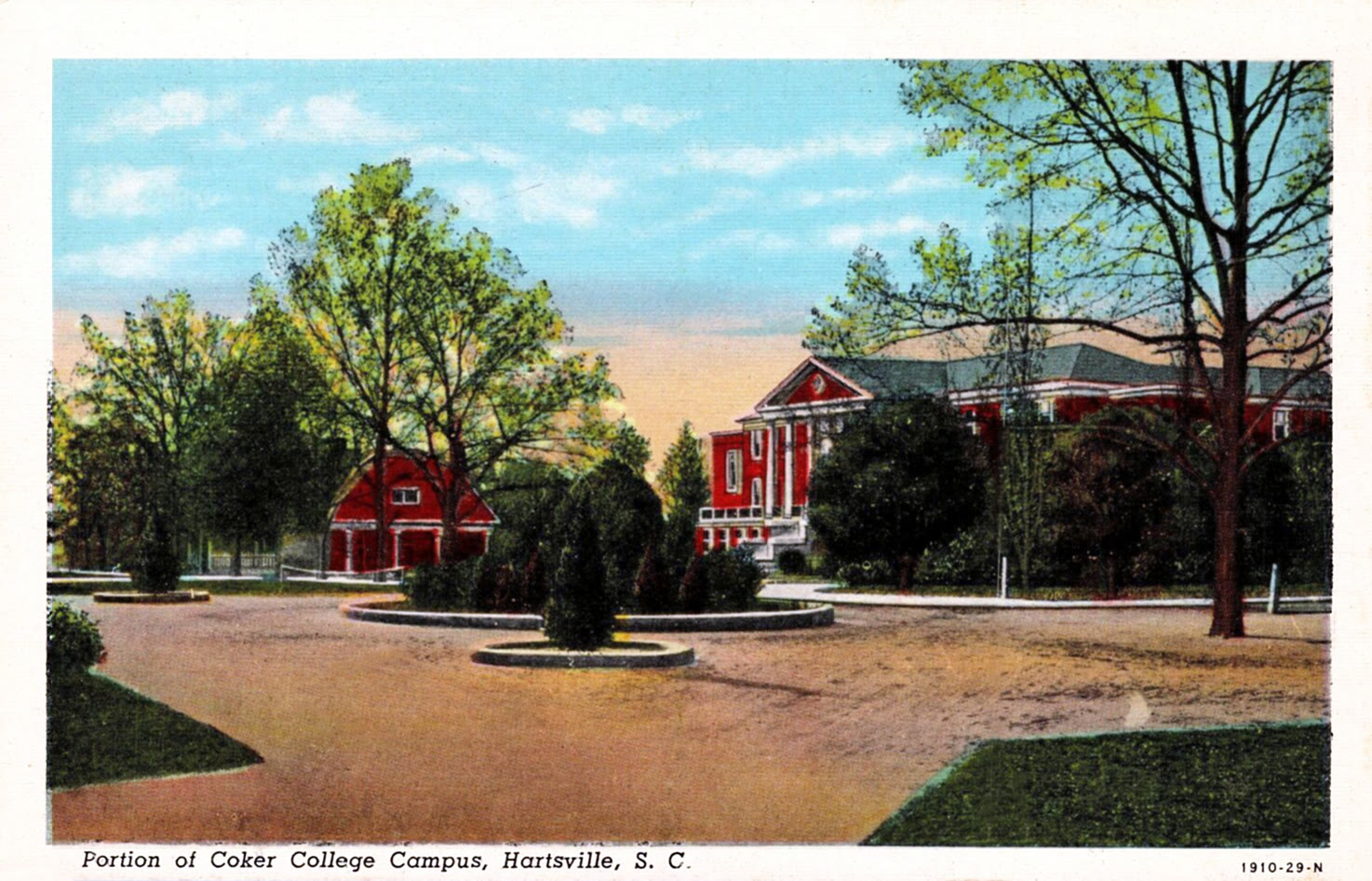
"At the core of the Coker-Hartsville relationship is Sonoco." Sonoco Products Company, "The Cokers and Hartsville: Building for Each Other"
Davidson Hall came first. Built in 1909 and 1910 with Major Coker's money, designed by the firm of Wilson, Sompayrac & Urquhart in a Neo-Classical idiom, it is the original administration building: six Ionic columns, a pedimented portico, the kind of front a young college builds when it intends to be taken seriously. It was listed on the National Register of Historic Places on November 10, 1983.
Memorial Hall followed in two phases, in 1913 and 1916, raised by Wilson & Sompayrac with four colossal Corinthian columns running the full height of the front. It joined the National Register on February 9, 1989. Between them the two buildings hold down a fifteen-acre campus of scenic grounds and historic brick, set in downtown Hartsville with eateries, shops, and a walkable Main Street a few steps off the quad. Kalmia Gardens, the 35-acre botanical garden on the edge of town, came to the college in 1965, another piece of the same Coker-family civic legacy, deeded over rather than sold.
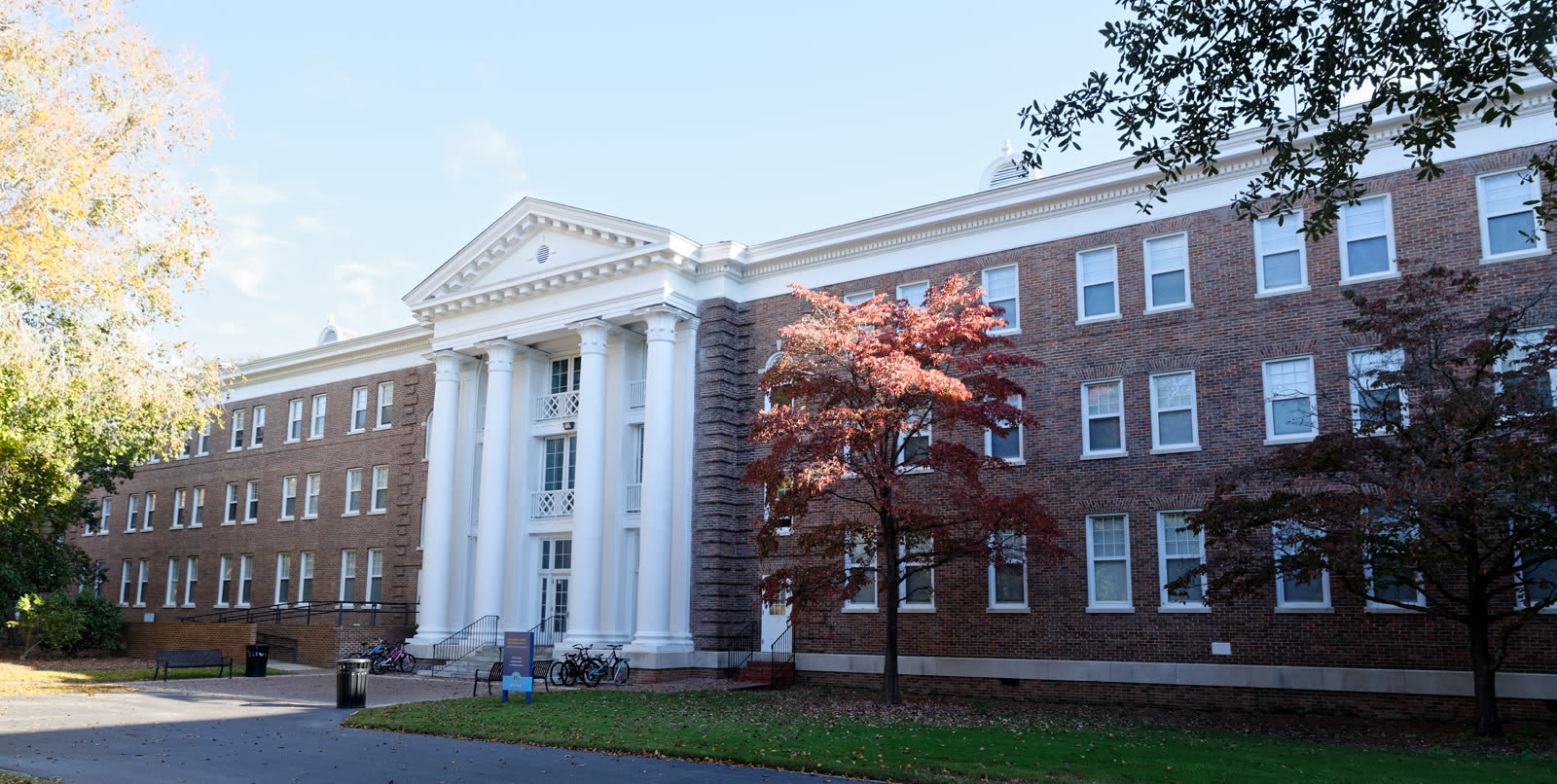
For its first decades the school was, formally, a college for women. It went non-denominational in 1944. Men had been attending since the end of the Second World War, and in 1969 Coker became officially coeducational. Then, effective July 1, 2019, Coker College became Coker University, a name change that followed real growth, including five graduate programs and four online bachelor's degrees added to a catalog that already ran to more than forty undergraduate areas of study.
Today the numbers are modest and that is the point. Coker reported a total enrollment of 1,263 in the fall of 2023 (1,187 undergraduates, 76 graduate students) with a twelve-to-one student-to-faculty ratio and more than ninety-five percent of full-time faculty holding a doctorate or terminal degree. Students arrive from thirty-three states and sixteen countries. The teams are the Cobras, navy and gold, competing in NCAA Division II, and the acrobatics and tumbling program once posted the program's first perfect ten. A small school, deeply built, in a small town that has always known its name.

A campus this woven into its downtown changes the shape of a visit. A tour of Davidson Hall, a Saturday Cobras game, move-in morning, a recital, a parents' weekend, a graduation: none of it has to begin with a drive in from the highway. The Mantissa stands at 130 East Carolina Avenue, in a century-old building put back to use, in the same few blocks as the school. You stay downtown and you walk to campus.
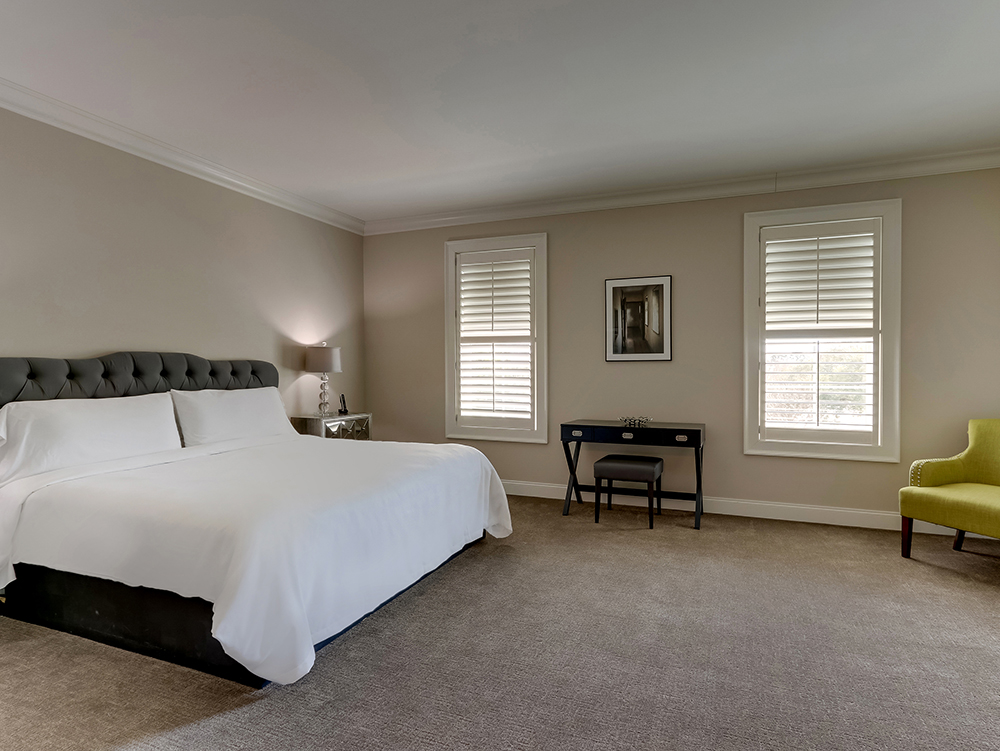
The seventeen suites read more like apartments than hotel rooms: full kitchens, premium beds, room for a family to spread out across a weekend and a coffee made the way you like it between events. Evenings settle easily. The rooftop lounge pours sunset above the downtown rooftops; Sam Kendall's is next door for dinner, with the Rooster 136 for the morning and Wild Heart Brewing Company down the street: neighbors, all of them, not amenities we control. Parking is free, so the car can stay put. And when the visit is over and you are pointed south toward Florida, I-95 at Florence is about thirty minutes away.
Coker traces its roots to Welsh Neck High School, founded in 1894 in Hartsville by Major James Lide Coker. The institution was chartered as Coker College for Women in 1908, became non-denominational in 1944 and coeducational in 1969, and adopted the name Coker University on July 1, 2019 after adding graduate and online degree programs.
The fifteen-acre campus sits in downtown Hartsville and includes two National Register of Historic Places landmarks: Davidson Hall, the 1909–1910 Neo-Classical administration building with a six-column Ionic portico, and Memorial Hall, built in 1913 and 1916 with a four-column Corinthian portico. The oak-shaded grounds are an easy and pleasant walk.
Major James Lide Coker (1837–1918) was a Confederate Army officer, businessman and philanthropist from Hartsville. In 1899 he organized the Southern Novelty Company, later renamed Sonoco Products Company, and he founded what became Coker University. His Hartsville enterprises also included the Pedigreed Seed Company and the Hartsville Cotton Mill, and he served as Mayor of Hartsville.
The Mantissa Hotel sits in downtown Hartsville at 130 East Carolina Avenue, a short walk from the Coker University campus. Its seventeen suites have full kitchens and premium beds, with a rooftop lounge above downtown and Sam Kendall's restaurant next door. Parking is free, so the car can stay put for a campus weekend.
Coker University and downtown Hartsville are about 24 miles northwest of I-95 at Florence, South Carolina, roughly a thirty-minute drive. It is an easy detour off the interstate for families traveling the corridor between the Northeast and Florida.
The campus is one chapter of a closely connected town. These pages cover the rest, and the logistics of a stay.
Stay in the same few blocks as the campus. Book direct.
The Mantissa Hotel is independently owned and operated and is not affiliated with, sponsored by, or endorsed by Coker University or Sonoco Products Company. All trademarks are the property of their respective owners. Enrollment, program and ranking figures are dated by school year and subject to change.